
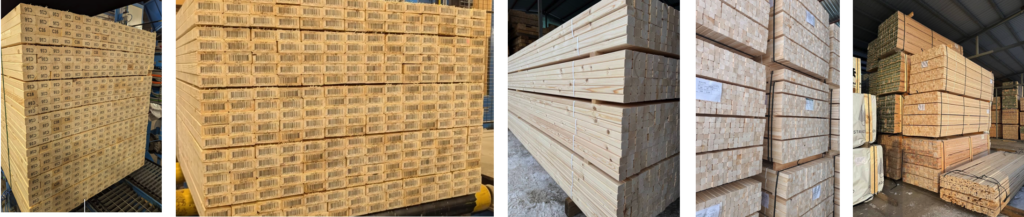
The Norguang Product Coding system is designed to create a clearer, more structured and more dependable basis for product identification across commercial, technical and export contexts. It is built to ensure that timber products are not defined through fragmented references alone, but through a consistent internal product logic that supports quotation discipline, specification alignment and more reliable supply execution.
What Product Coding Means at Norguang
At Norguang, Product Coding is not treated as a simple naming system or a set of trade labels. It is a structured identification framework through which a product is defined, interpreted and managed in a more disciplined way across the product, commercial and export process. The system is built on the principle that a product should first be defined as a normalized product unit, then assigned an internal product code and only after that, where needed, presented through a market-facing SKU (Stock Keeping Unit) adapted to a particular market, buyer, product line or commercial context. In this sense, Product Coding is not just a reference tool. It is part of a broader product architecture that helps connect internal product identity, market presentation and dependable trade execution.
Why Product Coding Matters
In timber trade, product discussions often begin with dimensions, grades, category names or familiar trade references. However, these references are not always sufficient to ensure that the product is interpreted in the same way by all parties involved. Commercial and technical misunderstandings do not always arise from the material itself. They often arise from inconsistent product references, mixed terminology and uneven interpretation across inquiry handling, quotation work, technical dialogue and supply execution.
A more disciplined coding system helps reduce that risk. It creates a clearer basis for how a product is understood, how it is referenced in commercial communication and how it is carried through the broader supply process. This supports stronger consistency, lower mismatch exposure and a more reliable basis for repeatable trade relationships.
Normalized Product Unit as the Foundation
The foundation of the Norguang Product Coding system is the normalized product unit. This means that each product position is defined through an established set of mandatory characteristics rather than through an isolated trade description. Depending on the product, this may include species, functional designation, product program, processing type, surface condition, geometry, dimensions, strength status, visual-commercial quality, moisture condition, structural-technological configuration and market segment.
This approach allows a product to be defined not as a loose commercial label, but as a controlled product identity that can be used consistently across product records, technical specifications, supplier communication and market presentation.
How Product Codes Are Built
At Norguang, product coding begins at an early stage of the order and product-framing process. Before a product is entered into the system as a coded item, the required product characteristics must first be identified and aligned. These may include key quality, dimensional, technical, processing or market-relevant parameters that are necessary to define the product in a commercially and operationally meaningful way.
Once these characteristics have been clarified, they are translated into structured coded elements and entered into the system through approved letter-based and numerical values. In this way, the code is not treated as a label added at the end of the process, but as the structured result of product definition itself. This allows a unique product code to represent a specific individual product position or even a particular product batch where the agreed characteristics are sufficiently specific. At the same time, the same coded product logic may later be used as a scalable production reference if the defined parameters are suitable for repeated output within the production system.
Where the product is later adjusted through targeted changes in production parameters, quality settings, dimensions, processing characteristics or other agreed variables, those changes are reflected in the coding structure. This makes it possible to preserve product discipline while still allowing controlled modification and commercially usable flexibility.
In this sense, Product Coding at Norguang supports both unique product definition and scalable product management within a structured identification framework.
Internal Product Code
Once a normalized product unit has been established, the product is assigned an internal normalized product code. This code serves as the primary internal identity of the product within the Norguang system. It provides a stable reference structure for product control, internal records, supplier-side coordination, technical framing and commercial consistency. Rather than functioning as a market shortcut, it functions as the core identity layer of the product.
This makes it possible to maintain a more reliable connection between what the product is internally, how it is discussed commercially and how it is later presented in export-oriented contexts. It is the primary identity layer of the product and remains the reference point from which all market-facing SKU logic is derived.
Market SKU as a Derived Layer
On the basis of the internal product code, a market SKU may then be created. In the Norguang system, the SKU is treated as a derived commercial layer rather than the starting point of product identity. Its purpose is to present the product in a more compact, market-facing form suitable for pricing tables, product lists, export presentation, customer dialogue and market-specific category handling.
This allows the same underlying product to be presented in different commercial formats depending on the requirements of a particular market or customer, while the internal product identity remains stable and controlled. In this way, the SKU supports flexibility in market communication while remaining subordinate to the product’s internal coded identity.
Product Coding and Marking Flexibility
Product Coding in the Norguang system does not mean that a product must always be marked in one fixed way. Once a product has been identified and coded internally, it may be marked and presented differently depending on buyer requirements, destination-market expectations, packing logic, contract structure or other practical supply needs.
Such marking may include additional commercial, technical, logistical or customer-specific information where this is important for acceptance, internal handling, downstream integration or market-specific product presentation. This additional marking does not replace or alter the underlying product identity defined within the Norguang system. It is a practical layer of presentation and supply support built on top of an already identified product.
This allows Norguang to combine internal coding discipline with external marking flexibility, which is essential in export trade where the same product may need to be presented differently across different customer and market environments.
How Product Coding Improves Trade Execution
A disciplined Product Coding system helps create a stronger link between what is discussed, what is quoted and what is expected to be supplied. It improves reference clarity, supports more consistent interpretation and reduces the likelihood of preventable mismatch across the commercial and technical process.
In practical terms, this supports clearer quotation handling, better supplier-side coordination, stronger product consistency across export contexts and a more dependable basis for communication between all parties involved. The benefit is not only better organisation of product references. It is a more controlled trade environment with lower interpretational risk, lower mismatch exposure, fewer preventable claims and stronger operational reliability over time.
Relation to Technical Specifications
Product Coding does not replace technical specifications. Instead, it creates the identification framework on which technical specifications can be built more precisely and more consistently. A product should first be identified as a normalized product unit and assigned its internal product code. It can then be translated into a market-relevant technical specification framework suited to the expectations, standards and acceptance logic of the destination market.
This means that the same underlying product may be presented through different technical frameworks depending on market context, while its internal identity remains stable within the Norguang system. For this reason, Product Coding should be understood as the foundation of disciplined technical specification work rather than as an alternative to it.
Value for Buyers and Producers
For buyers, the system creates a clearer basis for product interpretation, quotation review and expectation alignment. It reduces uncertainty around what the product reference actually means and how closely the final supply is expected to correspond to it.
It also creates a more flexible and controllable purchasing model. Once a product has been defined and coded, the buyer is not forced to restart the reference process from the beginning each time. A specific order can later be repeated through its established product code, making it easier to relaunch a previously agreed product into new production with greater speed, clarity and control. At the same time, individual parameters may still be adjusted from one batch to the next through targeted changes in dimensions, geometry, moisture condition or other agreed characteristics. This allows the buyer to preserve continuity where needed, repeat highly specific orders when required and still introduce controlled variation where commercial or operational requirements evolve.
For producers, the system creates a more structured basis for product planning, communication and repeatable execution. Instead of relying on fragmented order descriptions, the producer can work with an organized coding structure tied to defined product characteristics. Over time, this makes it easier to build and use a broader product-code database connected to specific customers, markets and product patterns. Such a system supports more efficient production programming, easier repetition of established product types and more controlled adjustment where new batches require targeted parameter changes rather than full redefinition from the start.
In this way, Product Coding supports not only clearer communication, but also a more scalable relationship between customer demand, production logic and repeatable supply execution.
A More Disciplined Product Architecture
At a broader level, Product Coding reflects a more disciplined approach to how timber products are identified and carried through the trade process. It moves product communication away from fragmented labels and toward a more structured internal architecture. By linking normalized product definition, internal coding, derived SKU logic and flexible marking options, Norguang creates a stronger basis for consistency across inquiry, quotation, technical dialogue, market presentation and supply execution.
The result is not simply a clearer coding structure, but a more dependable, scalable and market-adaptable product communication model for export-oriented timber trade.